
How to Store a TPE Sex Doll: Prevent Stains and Deformation

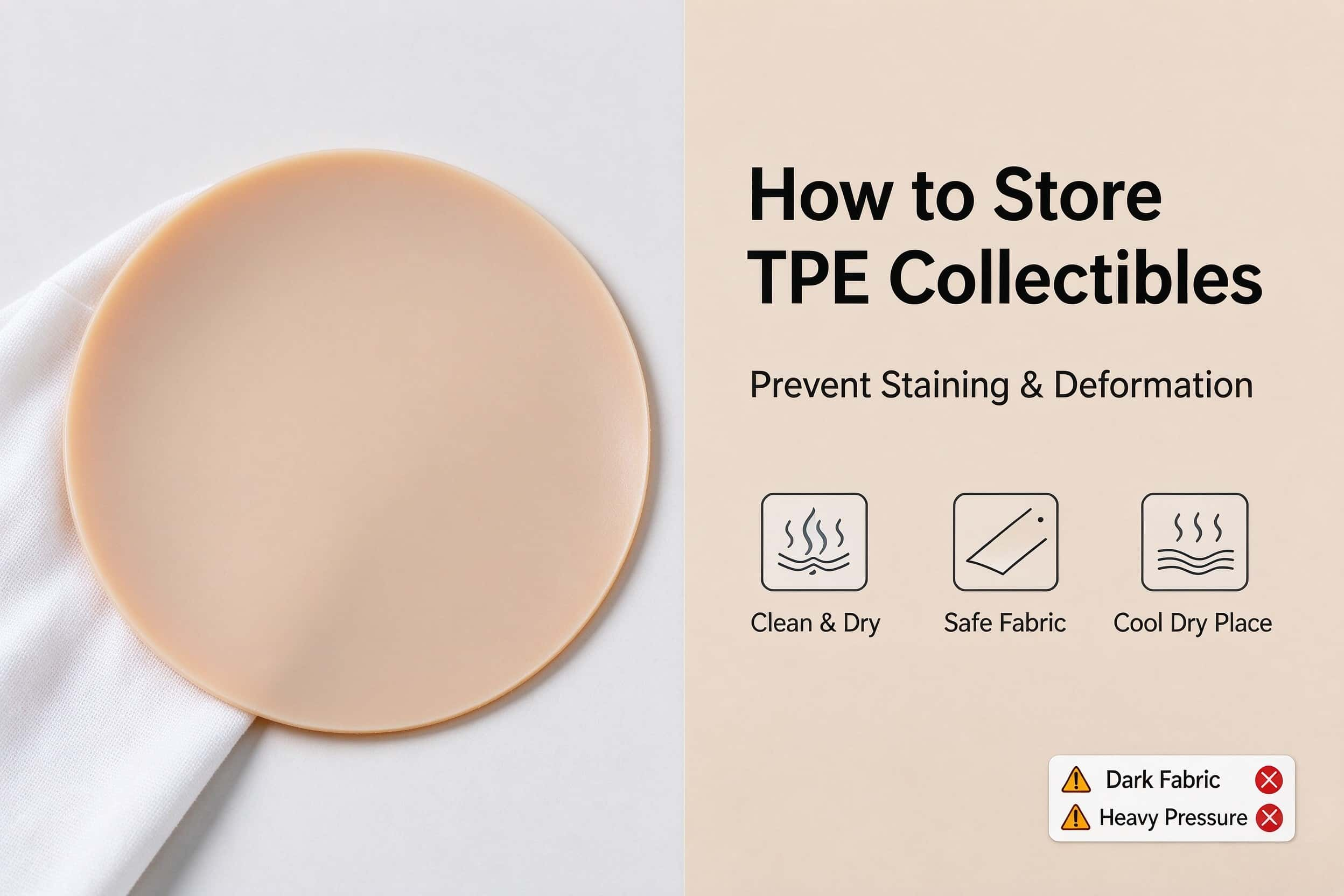
For TPE sex doll storage, start with a clean, fully dry surface, a loose undyed cotton cover and broad support that does not squeeze the shape. Keep the doll away from sunlight, heaters and dyed fabrics. Check both the surface and the material underneath it regularly.
A storage mark often starts with something ordinary: a dark towel, a tight waistband or a shelf edge pressing into one spot. TPE is soft, so the surface needs protection from both color transfer and sustained pressure.
This guide focuses on TPE torsos and other TPE collectibles. It covers what touches the material, how the weight rests and what to check before putting a piece away for several weeks.
TPE sex doll storage: a quick checklist
| Check | Practical storage choice | Problem to avoid |
|---|---|---|
| Surface | Clean and fully dry before covering | Trapped moisture or cleaning residue |
| Cover | Clean, undyed cotton, wrapped loosely | Dye transfer, tight seams and elastic |
| Support | Broad support suited to the model | Shelf edges, straps and weight on a small area |
| Location | A dry indoor space away from heat and sun | Hot cars, damp cupboards and sunny windows |
| Inspection | Lift the cover and check the contact surface | Unnoticed oil marks, stains or pressure dents |
Follow any model-specific instructions supplied with your Dreamsdoll torso. A position suitable for one shape may put too much pressure on another.
Choose a cover that reduces TPE staining
Dyed fabric can transfer color to TPE during contact. Dark denim, black towels, printed cloth and strongly colored storage bags are avoidable risks. Softness alone does not tell you whether a fabric is suitable.
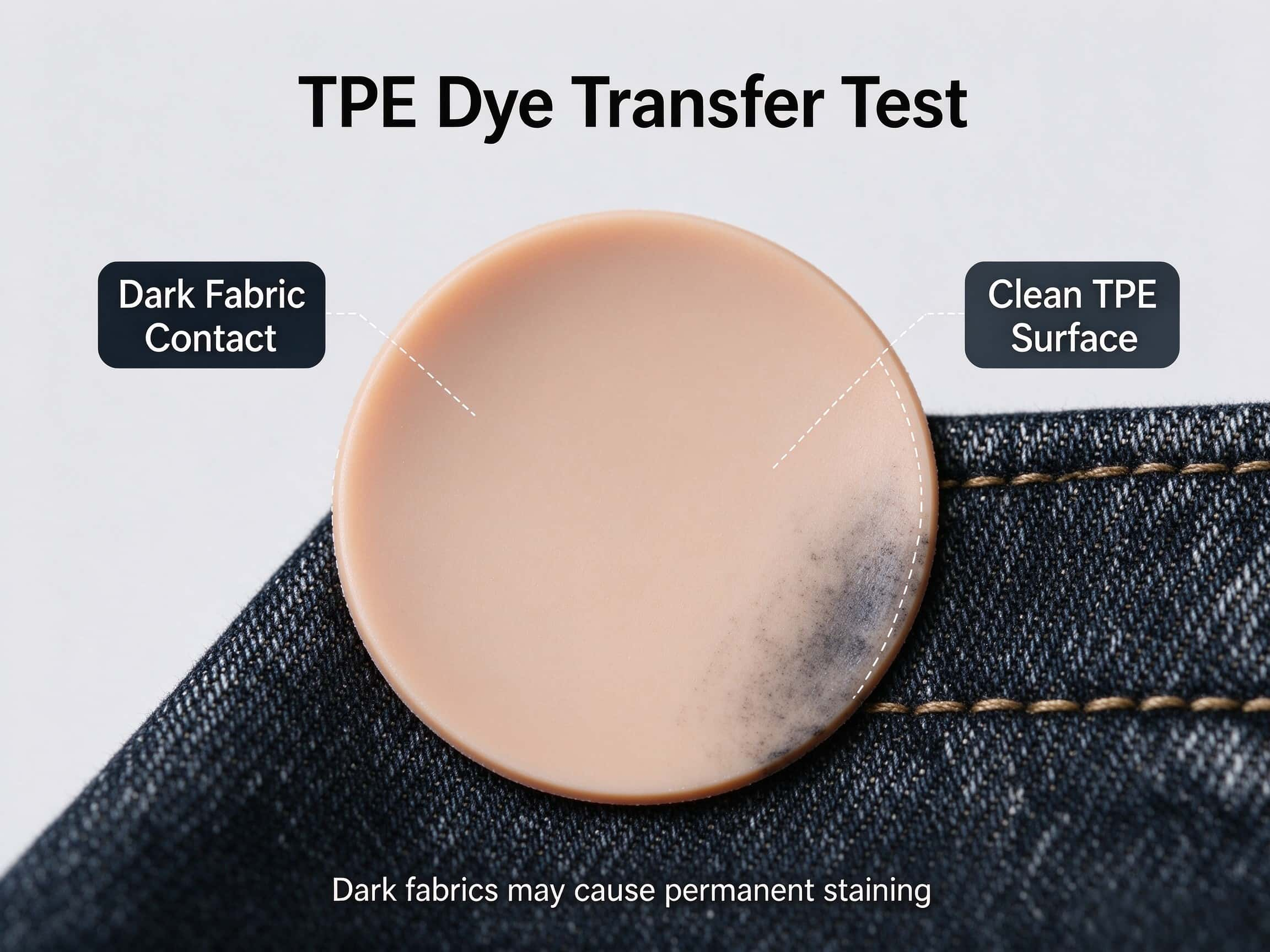
Clean, undyed cotton is a sensible starting point for a cover. Choose a plain fabric without printed patterns, rough trim or tight elastic. A white fabric is not automatically undyed or free of finishes, and a cotton label does not guarantee compatibility.
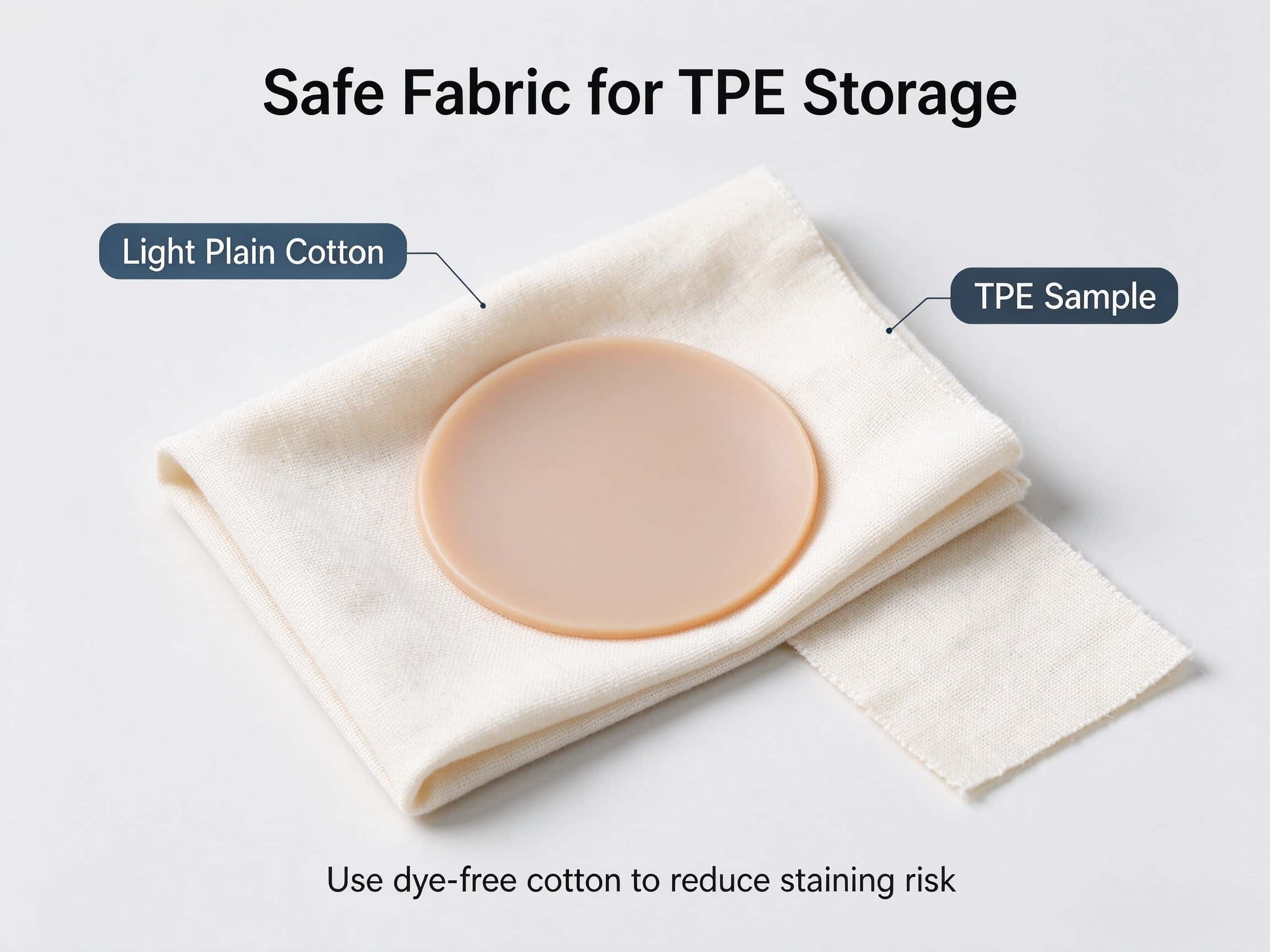
If a cloth leaves color on a white tissue, do not use it against TPE. Passing that rub test, however, does not prove that weeks of contact will be safe. It only shows that the fabric did not release visible color during that particular check.
Remove unverified clothing before long-term storage, especially dark outfits and anything with a tight waistband. For dressing between storage periods, see the Dreamsdoll torso clothing guide.
Spread the weight to reduce lasting pressure marks
TPE can hold an impression after pressure is removed. Whether a mark recovers depends on the formulation and the conditions, including how heavily and how long the material was compressed. A small dent is not automatically permanent, but recovery is not guaranteed.
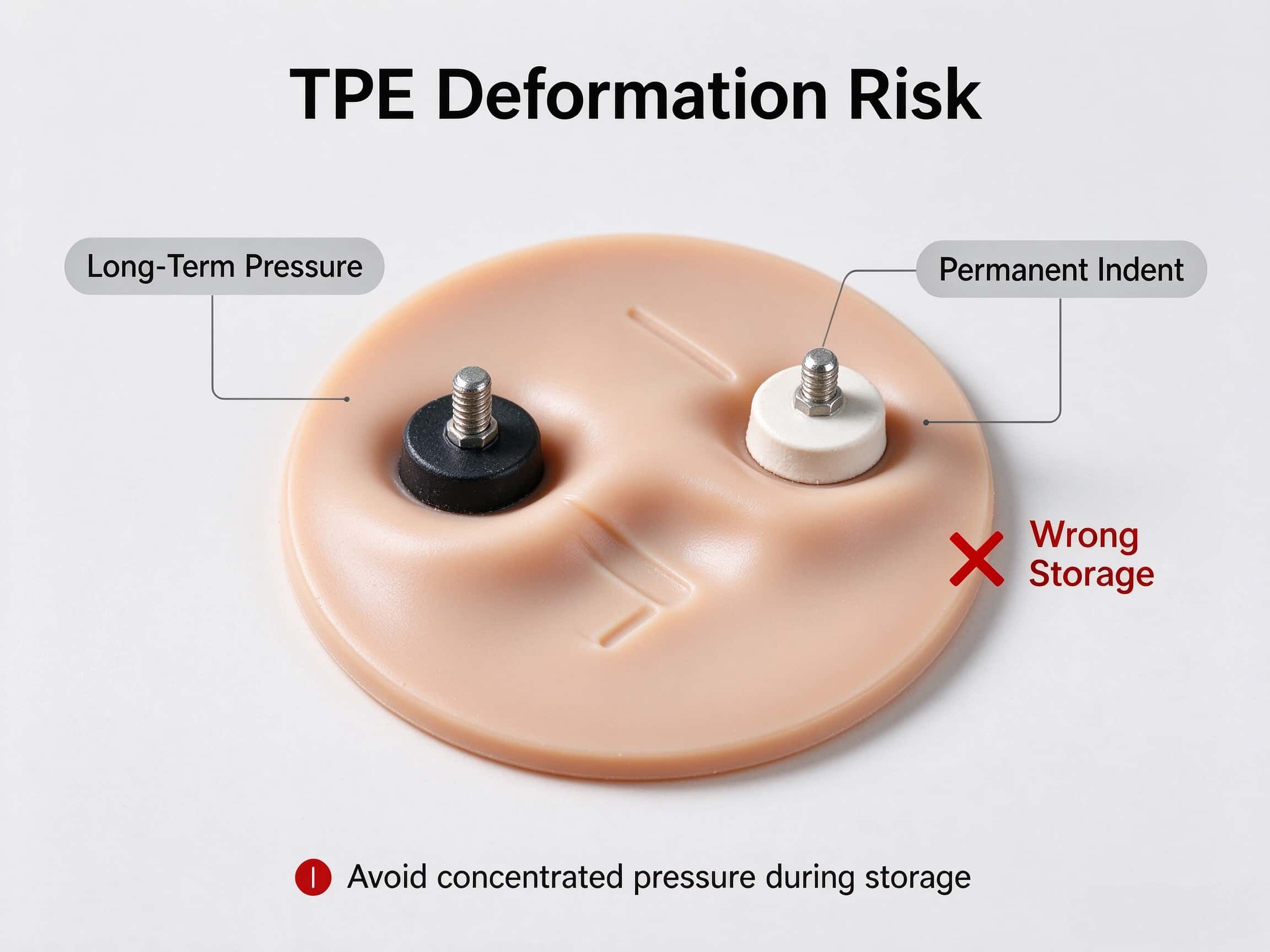
- Use a roomy storage space that does not squeeze the torso.
- Keep boxes and other heavy objects off the surface.
- Avoid narrow supports, shelf edges and tight straps that concentrate weight.
- Do not force a flexible section into a folded position.
- Use hanging or standing storage only when the model and its hardware are explicitly designed for it.
When inspecting the piece, look at the areas bearing its weight. Adjust the support if you see a new impression. Reposition it only in ways allowed by the model’s instructions; rotating a torso onto a more delicate area can create a different pressure problem.
For material context, Avient’s TPE FAQ explains compression set, or the deformation left after compression. This is general materials information, not a test result for a particular Dreamsdoll model.
Manage oil marks without over-treating the surface
Low-bleed TPE does not mean zero oil migration. Check the cover and the support underneath for an oily patch, and replace a cover that has become damp or soiled. Avoid direct contact with furniture or unknown packaging materials.
A light application of a compatible care powder may help with surface tackiness if the product instructions recommend it. Powder does not stop oil moving through the material, so adding more powder is not a solution to repeated heavy oil buildup.
If oil appears unusually heavy, returns quickly after appropriate cleaning or comes with a change in texture, contact Dreamsdoll for guidance. Do not assume the cause is poor storage. The low-bleed TPE care guide explains the material and its care limits in more detail.
Keep the storage space dry, shaded and away from heat
Choose a stable indoor location away from direct sunlight, radiators and space heaters. A closed car or hot attic is a poor place for long-term TPE storage. Use the temperature limits supplied for the particular product rather than treating one number as suitable for every TPE formulation.
Dry the piece before covering it, including any cleaned openings. A dry outer surface does not establish that an interior is dry. Keep the storage area itself free of dampness.
A loose cover and a roomy container make inspection easier. An airtight container is not automatically damaging to TPE, but it can trap moisture if the piece or lining is still damp. Do not seal a freshly cleaned piece away and assume that it will finish drying inside.
A five-step TPE storage routine
- Clean gently. Follow the TPE cleaning and maintenance guide and the instructions for the specific model.
- Let every cleaned area dry. Inspect openings as well as the outer surface before adding a cover.
- Check what will touch the TPE. Remove unverified clothing and choose a clean, undyed cover without tight seams or elastic.
- Set up broad support. Leave enough room around the torso and keep stored items from pressing against it.
- Inspect after putting it away. Check a new setup early. For longer storage, a check every few weeks is a practical starting habit, not a tested interval that guarantees protection.
Check sooner if you notice oil transfer, dampness or a pressure mark. Good TPE torso storage is a routine you adjust to the piece, rather than a container you can forget about for months.
What to do if you find a stain or dent
First remove the source of contact or pressure. Note what touched the area, how the piece was supported and roughly how long it was stored that way. Clear photos can help when asking for advice.
A surface mark and dye absorbed into the material may need different treatment. Some stains may improve with an approved treatment; others can be difficult or impossible to remove. Avoid household bleach, solvents, aggressive scrubbing and improvised stain-removal recipes.
For a dent, remove the pressure and seek advice if it persists. Do not try to reshape TPE with a hair dryer, hot water or force unless the manufacturer provides specific instructions for that product. Contact Dreamsdoll about the affected model before attempting a repair.
Frequently asked questions about TPE storage
What fabric is safe for storing a TPE sex doll?
Clean, undyed cotton is a practical starting choice for a loose cover. Avoid dark dyes, printed areas, rough trim and tight elastic. White color, a cotton label or a successful tissue rub test does not guarantee long-term compatibility.
Can a TPE sex doll get permanent dents from storage?
Yes. Sustained pressure can leave lasting impressions, although some marks may recover. Use broad support, avoid tight containers and follow the model’s storage instructions. Do not assume a dent will recover on a fixed schedule.
Does low-bleed TPE still need careful storage?
Yes. Low-bleed TPE can still transfer oil, pick up dye and develop pressure marks. Keep the surface dry, use suitable contact materials and inspect the cover and support regularly. Care powder does not stop internal oil migration.
Is silicone easier to store than TPE?
Silicone and TPE have different formulations and care requirements; neither should be treated as stain-proof or pressure-proof. Follow the instructions for the material and model you own.
Should I seal a TPE sex doll in an airtight container?
Do not seal a damp piece or damp lining inside a container. A clean, dry, roomy setup with a loose cover is a practical option. Airtight storage is not automatically harmful, but the product must be fully dry and the setup must follow the manufacturer’s instructions.
How often should I check a stored TPE torso?
Check a new storage setup early, then inspect regularly during longer storage. Every few weeks is a practical starting habit, not a tested safe limit. Check sooner if you find dampness, oil transfer, staining or pressure marks.
Can dye stains on TPE be removed?
Some marks may improve with a treatment approved for the specific product, while absorbed dye can be difficult or impossible to remove. Stop contact with the suspect fabric and ask for guidance before using stain removers, solvents or heat.
Plan sex doll storage before choosing the size
Measure the usable storage area, including the opening and space for your hands, before choosing a torso. A category name does not establish whether it will fit. Compare the listed length and widest measurements, and allow room for broad support and a loose cover without pressure from other stored items.
The mini torso collection and life-size torso collection provide different dimensions to compare. For a smaller home, use the apartment-friendly torso guide alongside the care routine above. Smaller dimensions do not remove the need for complete drying and supported storage.
How do I measure a storage case for a torso?
- Use product dimensions, not shipping-box dimensions. Compare the exact model’s length, width and depth where provided. Bust or hip circumference cannot establish its total width or depth.
- Measure the opening separately. A lid lip, door or drawer opening can be smaller than the space inside. Include room for your hands and for lifting the torso out without squeezing it.
- Check usable internal space. Allow for lining, broad support and a loose cover. External case dimensions do not tell you how much room remains inside.
- Check support and contact materials. Confirm that the base can support the product and that lining, straps and dyes are compatible with the model’s instructions.
- Plan drying and inspection. Do not close a damp torso or lining inside a container. Keep the setup accessible so you can check moisture, dye transfer and pressure marks.
If the listing lacks width, depth or a permitted storage position, ask about that model before buying a case. A mini or life-size category label is not a container-fit guarantee. The apartment storage checklist helps you plan access and handling.